


If you searched "frozen shoulder" or "shoulder pain treatment Aberdeen" this week, there is a fair chance the coat did it. Not caused it, but exposed it. Reaching back to feed the second arm into a winter coat sleeve is one of the biggest movements a shoulder makes all day, and it is the one a stiff shoulder fails first. This guide explains the three usual reasons a shoulder stops shifting, how to tell them apart, what the NHS says to do, and where osteopathy fits in.
The winter coat test
Put your good arm into its sleeve first, then reach the other hand behind you to find the second sleeve. If the painful shoulder lets you do that with a grumble, the joint itself still moves and the problem is more likely a tendon or the neck. If the arm simply will not go back there, however hard you try, and it has been getting worse for weeks or months, the joint capsule may be the problem, which is what a frozen shoulder is.
It is not a diagnosis, just a useful first sort, and the pattern of what hurts and what is blocked is the first thing an osteopath looks at.
Frozen shoulder: what it is and how long it lasts
Frozen shoulder, which doctors call adhesive capsulitis, happens when the tissue around the shoulder joint becomes inflamed, then tightens and shrinks. The NHS describes two main symptoms: pain in the shoulder that can be worse at night and disturb sleep, and stiffness that makes it difficult to move. Usually the pain comes first and the stiffness builds behind it, until the shoulder is more stuck than sore; then, slowly, the movement returns.
The honest part is the timescale. The NHS says frozen shoulder can take months or years to get better, though the pain and stiffness will usually go away eventually. It is often not clear why someone gets it. Two things raise the chances: an injury or surgery that stops you moving your arm normally, and diabetes.
NHS treatment works in three steps. Pain relief first: avoid the movements that hurt, move the shoulder only gently, and try paracetamol, then ibuprofen if that does not work. Stronger pain relief next, which may mean prescribed painkillers or a steroid injection into the shoulder from a doctor, usually only for a short time because of side effects. Then getting movement back, with gentle exercises at home and, if the pain continues, a referral for physiotherapy, which usually lasts at least six weeks. The NHS also says to use a heat pack for up to 20 minutes at a time, to keep moving the shoulder because keeping it still makes the pain worse, and not to make up your own strenuous exercises.
Tendon problems: the catch when you lift
The second cause is the rotator cuff, the group of tendons that hold the ball of the shoulder in its shallow socket and lift the arm. The NHS groups these problems as tendonitis, bursitis and impingement, where a tendon is pinched as the arm lifts, and the tell is pain that is often worse while using your arm or shoulder. You can usually get the hand behind your back, but lifting it out to the side or overhead brings a sharp catch.
The NHS advice for this kind of shoulder pain is to stay active and gently move the shoulder, try shoulder exercises for six to eight weeks to stop the pain returning, use painkillers and heat or cold packs so you can keep moving, and not to completely stop using the shoulder, because that can stop it getting better. It usually takes two weeks of this before the pain starts to ease, and the NHS says recovery can take six months or longer.
When it is the neck, not the shoulder
The third cause is not in the shoulder at all. The nerves that supply the arm leave the spine in the neck, so a stiff or irritated neck can send pain into the top of the shoulder and down the arm. The giveaways are pain that changes when you turn or tilt your head rather than when you lift the arm, and pins and needles or a cold feeling in the arm. The NHS says to see a GP if neck pain comes with pins and needles or a cold arm, because that could be something more serious.
Exercises aimed at the shoulder will not help a shoulder that is being driven from the neck, and in practice the two overlap often.
When to see a GP or get urgent help
The NHS says to see a GP if shoulder pain is getting worse or does not improve after two weeks, if it is very difficult to move your arm or shoulder, or if shoulder pain and stiffness do not go away. Ask for an urgent GP appointment or get help from NHS 111 if:
- you have sudden or very bad shoulder pain
- you cannot move your arm
- your arm or shoulder has changed shape or is badly swollen
- you have pins and needles that do not go away, or there is no feeling in your arm or shoulder
- your arm or shoulder is hot or cold to touch
- the pain started after an injury or accident, like a fall
- you develop severe pain in both shoulders, or you feel feverish or unwell
These can be signs of something serious, like a broken or dislocated bone, or a torn ligament or tendon.
How osteopathy fits in
An osteopath's first job is the sort above: joint capsule, tendon or neck. That means a history (when it started, what blocks and what catches, whether you have diabetes or had a fall) and an examination of the shoulder, shoulder blade, upper back and neck together. Osteopathy could help with frozen shoulder and shoulder pain that arise from associated musculoskeletal conditions of the back and neck. It is not a treatment for an isolated frozen shoulder, and nothing hands-on shortens the capsule's own timetable; the aim is to keep the neck, upper back and shoulder blade moving well around it and to support the exercise plan the NHS recommends. The clinic does not give injections; that conversation is with your GP.
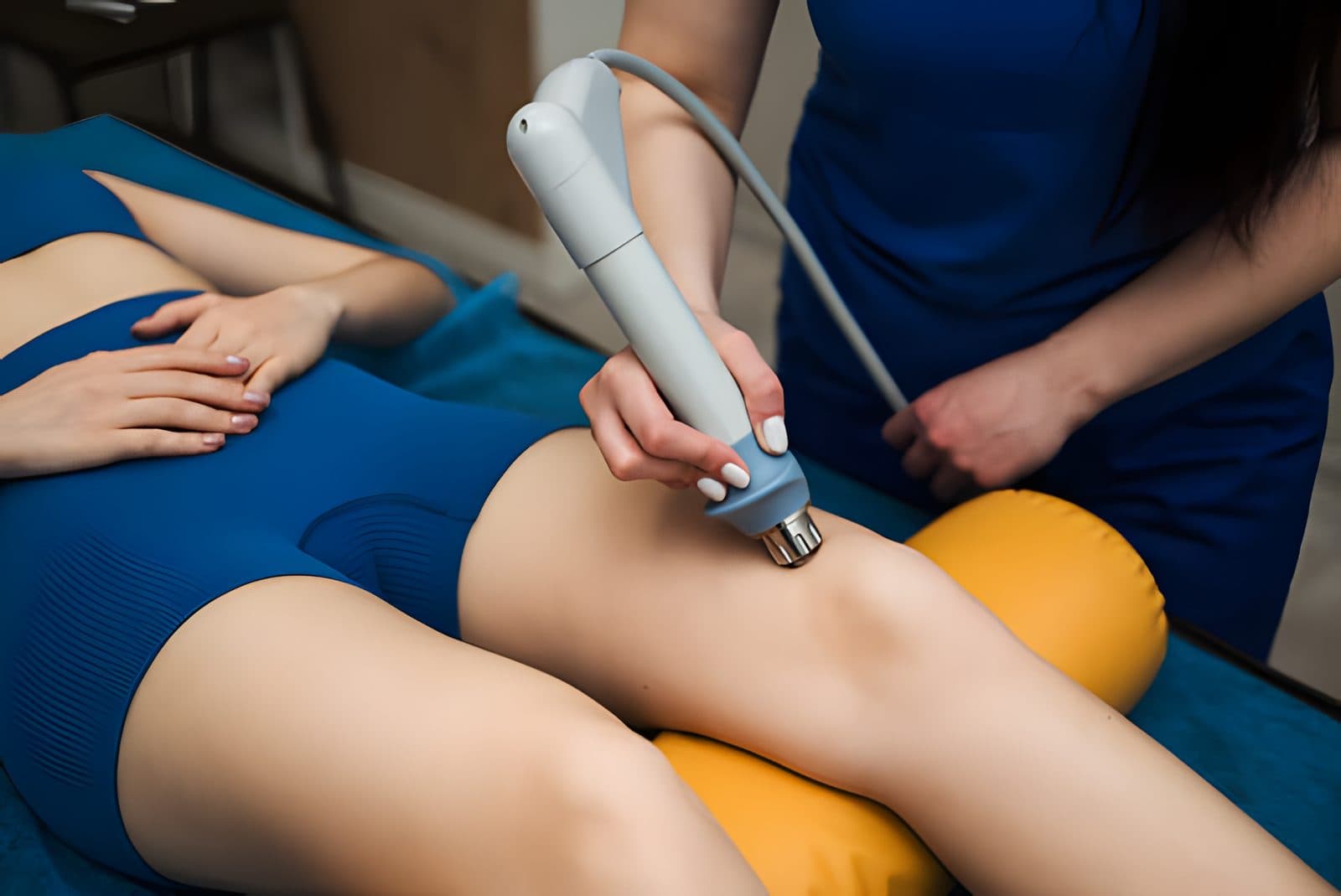
For some long-standing tendon problems, including calcific tendinopathy, shock wave therapy is available at the clinic at £65 for 30 minutes. Read more on the shoulder and elbow pain and neck pain pages. A first osteopathy visit, including the consultation, is £80, and continuing treatment is £70. No referral is needed: book online or call 01224 707877.
Sources
- NHS: frozen shoulder
- NHS: shoulder pain
- NHS: neck pain
- Committee of Advertising Practice: health, osteopathy (the accepted conditions list)
This article is general information, not personal medical advice. If you are worried about a symptom, see your GP or call NHS 24 on 111.

Related treatments
More from the blog

Back Pain Offshore: Long Sits, 12-Hour Shifts and the Helicopter, and What to Do Between Trips
Why back pain follows the offshore rotation, what the NHS and NICE say helps, when to see a GP, and how to use your time ashore in Aberdeen to sort it out.

Clocks Back, Neck Forward: Desk Posture and the Dark-Evening Neck Pain
Why neck pain at the desk gets worse once the clocks go back, what the NHS says to do about it, when to see a GP, and how an osteopath in Aberdeen could help.

Using Your Health Insurance for Osteopathy in Aberdeen: Aviva, WPA and Cigna Explained
How to use Aviva, WPA or Cigna health insurance for osteopathy in Aberdeen: referrals, authorisation, excesses and limits, and what to tell us when you book.
Book your appointment
Need an appointment or just have a general enquiry? Complete the form and we'll be in touch within 24 hours. If you require to be seen urgently or need some initial advice, please give us a call.