

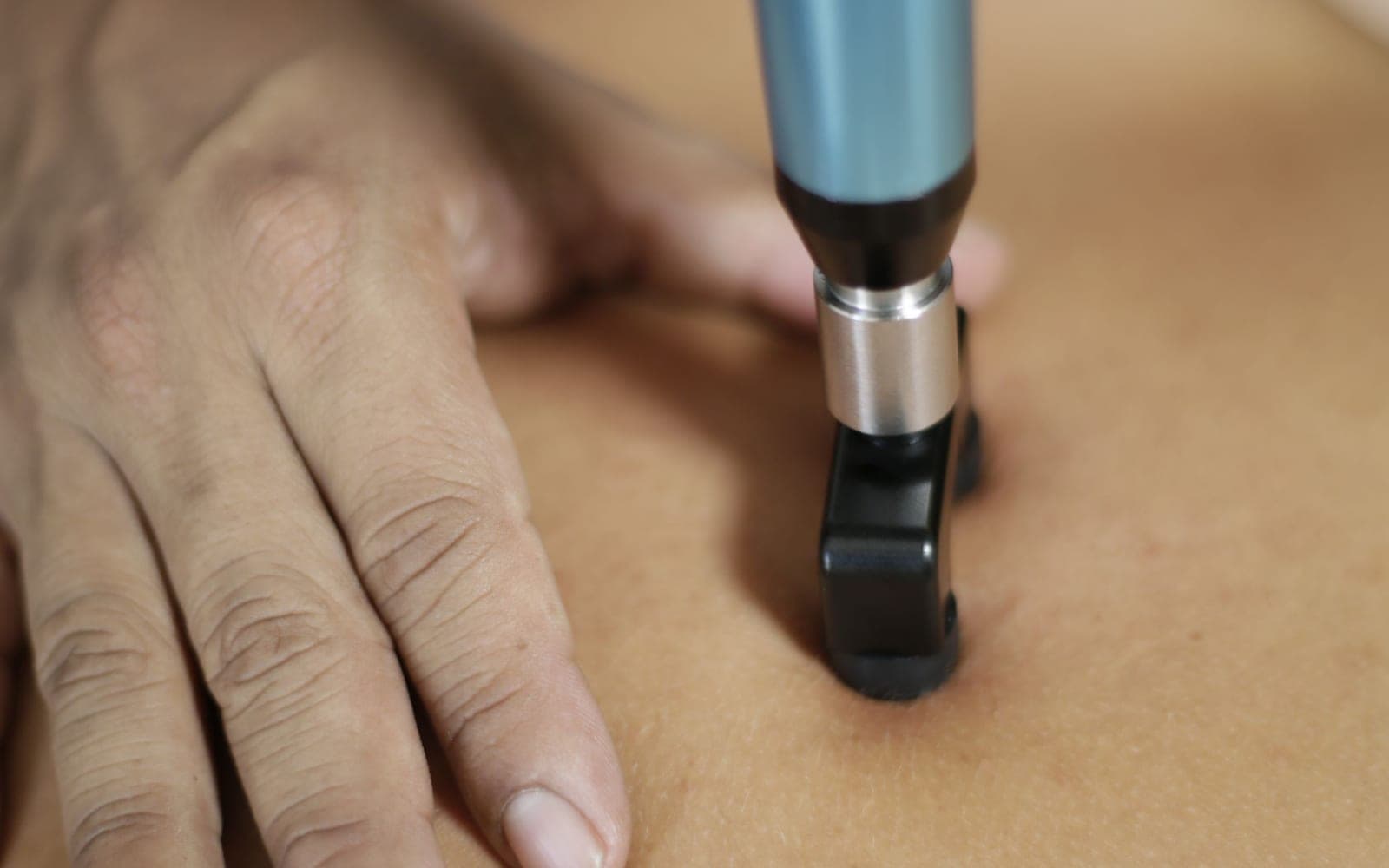
Shockwave therapy, or extracorporeal shockwave therapy (ESWT), passes a rapid series of acoustic pulses through the skin into a painful tendon and the tissue around it. It is offered for a handful of long-standing tendon and heel problems, usually once simpler treatments have been tried. Here is what it is, what a session involves, what the national guidance says about the evidence, and who should not have it.
What is shockwave therapy?
The National Institute for Health and Care Excellence (NICE) describes ESWT as a non-invasive treatment in which a device is used to pass acoustic shockwaves through the skin to the affected area. "Extracorporeal" simply means from outside the body: nothing is inserted. The "shock" is a physical sound wave, not an electric one.
At our clinic, each treatment area receives roughly 2,000 pulses, which takes about five minutes.
How does shockwave therapy work?
During a session the handpiece is held against the skin over the painful area and delivers the pulses in quick succession. The intensity can be adjusted, so if it feels too strong it can be turned down.
Why it might help is less clear. NICE states that the mechanism by which shockwave therapy might affect a tendon problem is not known, so we would rather say that plainly than describe it as a cure.
What is shockwave therapy used for?
Shockwave therapy is most often used for long-standing tendon and heel problems, including:
- Plantar fasciitis: pain on the bottom of the foot, around the heel and arch. The NHS says that if it does not get better with exercises, insoles and the right shoes, you may be offered other treatments such as steroid injections or extracorporeal shockwave therapy.
- Achilles tendinopathy: pain in the Achilles tendon, which connects the calf muscles to the heel bone.
- Tennis elbow (lateral epicondylitis): pain on the outside of the elbow caused by overuse. Our page on shoulder and elbow pain covers the other ways it is managed.
- Other tendon problems: for example patellar tendinopathy, pain in the tendon below the kneecap.
What does the evidence say?
NICE has published guidance on shockwave therapy for several of these conditions. For plantar fasciitis, tennis elbow and Achilles tendinopathy, its conclusion is the same: the evidence raises no major safety concerns, but the evidence on how well it works is inconsistent. NICE therefore says it should only be used with special arrangements for consent and audit, and that patients should understand that uncertainty before they agree to it.
For calcific tendinopathy in the shoulder (calcium deposits in the shoulder tendons), NICE's 2022 guidance found the evidence on efficacy inadequate and says the procedure should only be used in research.
In practice, shockwave therapy helps some people and not others, and it is not a first-line treatment. Ask us what the evidence shows for your problem before you book a course, so you can decide whether it is worth trying alongside the other options.
What happens at a shockwave session?
- The treatment itself: about 2,000 pulses per treatment area, taking around five minutes. It can feel fairly uncomfortable, but most people tolerate it, and the intensity can be lowered.
- How many sessions: normally three to five, a week apart. A very long-standing problem occasionally needs two or more extra sessions.
- Afterwards: some discomfort is common 2 to 4 hours after treatment and can last up to 48 hours. Bruising, swelling and redness can occur, and these usually settle within 5 to 10 days. We advise easing off activity for 48 hours after each session, even if the area feels good, and not using ice.
- Results: any benefit can take 3 to 4 months to show. If there has been no marked improvement by then, see your GP about other treatment options.
Who should not have shockwave therapy?
Shockwave therapy is not suitable for children, or if you:
- are pregnant
- have a blood clotting disorder, thrombosis, or a heart or circulatory condition
- take anticoagulant (blood-thinning) medicines
- have cancer or a tumour
- have polyneuropathy as a result of diabetes
- have acute inflammation or infection in the area to be treated
- have had a cortisone (steroid) injection in the previous 6 weeks
Tell us about your medical history before treatment so we can check it is safe for you.
How Aberdeen Osteopathy Clinic can help
Shockwave therapy at our Bridge of Don clinic is given by Abdul Abu-Laban, a GOsC-registered osteopath (registration number 6294) with over 19 years of experience. You do not need a GP referral to book. A shockwave session is £65 for 30 minutes; see our prices page for everything else.
Full details, including aftercare, are on our shockwave therapy page. If you are not sure whether shockwave therapy is right for your problem, an osteopathy appointment is a good place to start. Book an appointment whenever you are ready.
Frequently asked questions
Does shockwave therapy hurt?
It can be fairly uncomfortable while it is being done, but most people tolerate it well, and the intensity can be turned down if needed. Some soreness for a few hours afterwards is common.
How many shockwave sessions will I need?
Normally three to five sessions at weekly intervals. A very long-standing problem occasionally needs a couple more. Any benefit can take 3 to 4 months to show.
Is shockwave therapy available on the NHS?
The NHS lists it among the treatments you may be offered for plantar fasciitis that has not improved with other care. Ask your GP whether it is offered locally.
Do I need a referral for shockwave therapy?
No. You can book with us directly, without a GP referral.
Sources
- NICE HTG200: Extracorporeal shockwave therapy for refractory plantar fasciitis
- NICE HTG201: Extracorporeal shockwave therapy for refractory tennis elbow
- NICE HTG426: Extracorporeal shockwave therapy for Achilles tendinopathy
- NICE HTG645: Extracorporeal shockwave therapy for calcific tendinopathy in the shoulder
- NHS: Plantar fasciitis
This article is general information, not a diagnosis or personal medical advice. If you are unsure about your symptoms, speak to your GP or NHS 111.

Related treatments
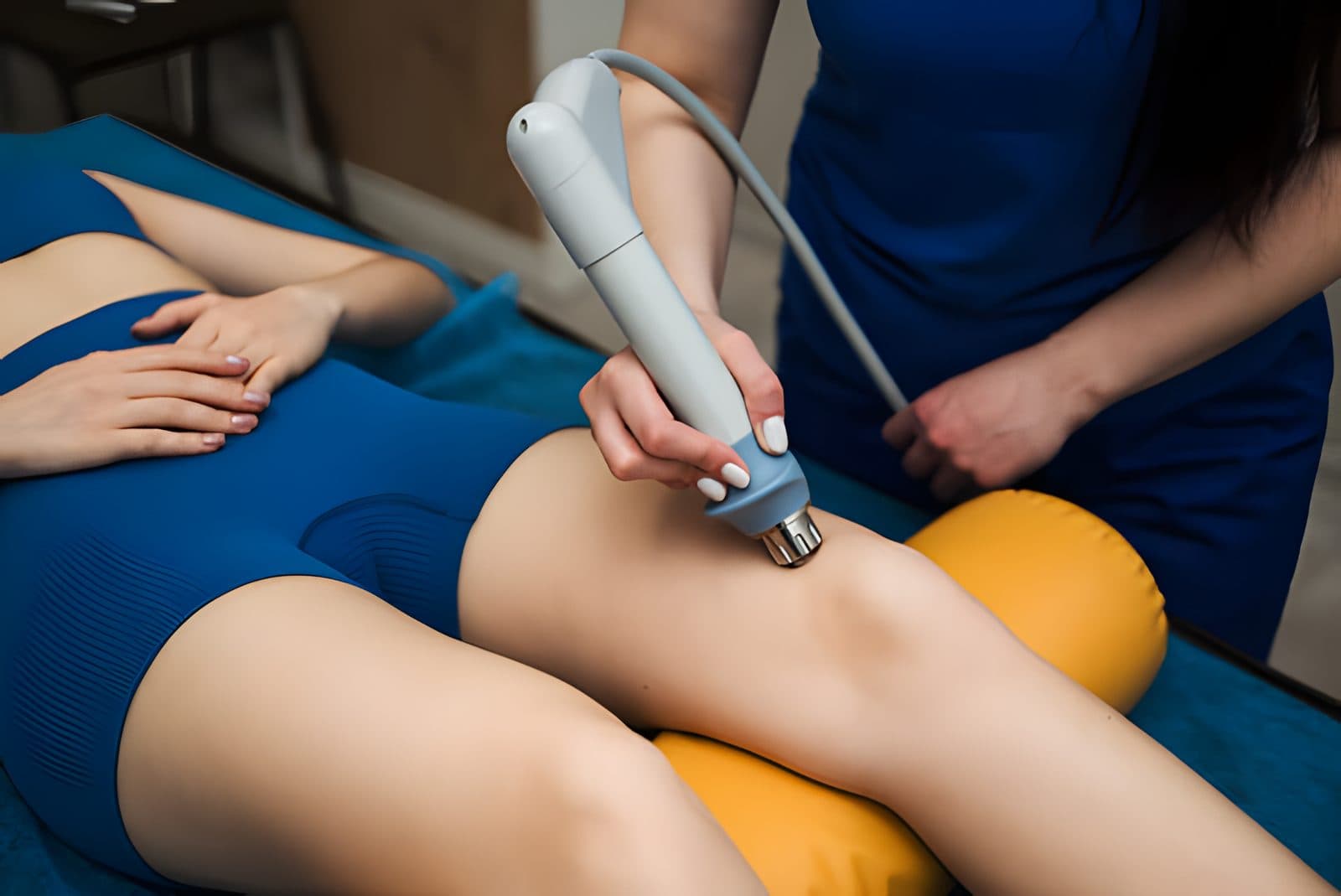
Shock Wave Therapy
Shockwave Therapy [Extracorporeal Shockwave Therapy] is a series of high-energy percussions to the affected area. The shockwave is a physical sound wave “shock”, not an electric one.
Learn more →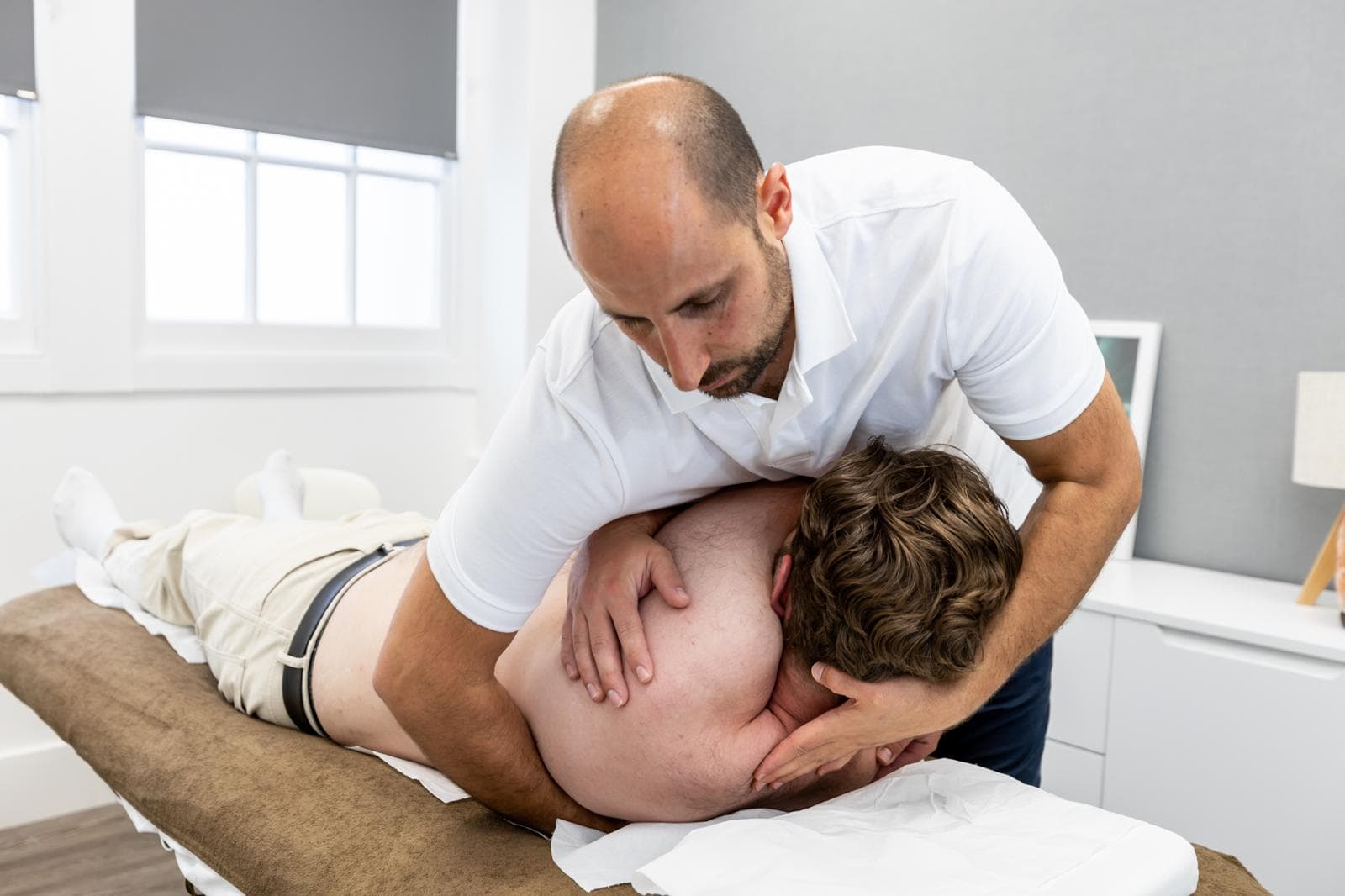
Osteopathy
Osteopathy treatments are a form of manual medicine that treats the muscular skeletal system including muscles, ligaments, nerves, joints and problems related to its function.
Learn more →Related conditions
More from the blog
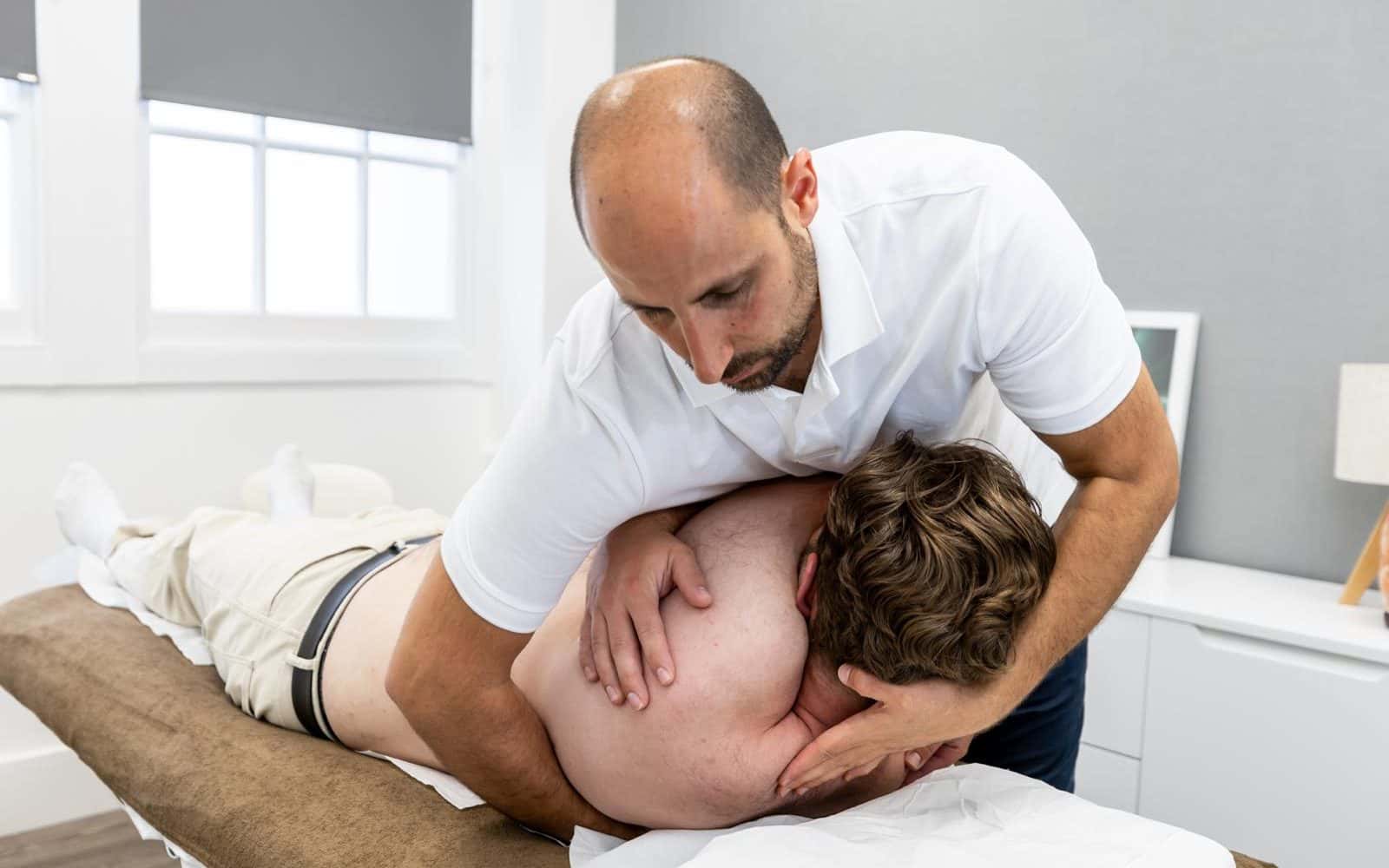
How to Choose an Osteopath in Aberdeen: the Register, Insurance and Five Questions to Ask
How to check the GOsC register, what registration guarantees, how health insurance works, and five questions to ask before you book an osteopath in Aberdeen.
How Much Does an Osteopath Cost in Aberdeen?
How much does an osteopath cost in Aberdeen? See our current prices, what affects the cost, insurance cover, and whether you need a GP referral to go private.
Safe Back Pain Relief in Pregnancy, Including Osteopathy
Back pain in pregnancy is very common. Safe relief tips from NHS guidance, the warning signs to know, and how an osteopath in Aberdeen can help.
Book your appointment
Need an appointment or just have a general enquiry? Complete the form and we'll be in touch within 24 hours. If you require to be seen urgently or need some initial advice, please give us a call.