

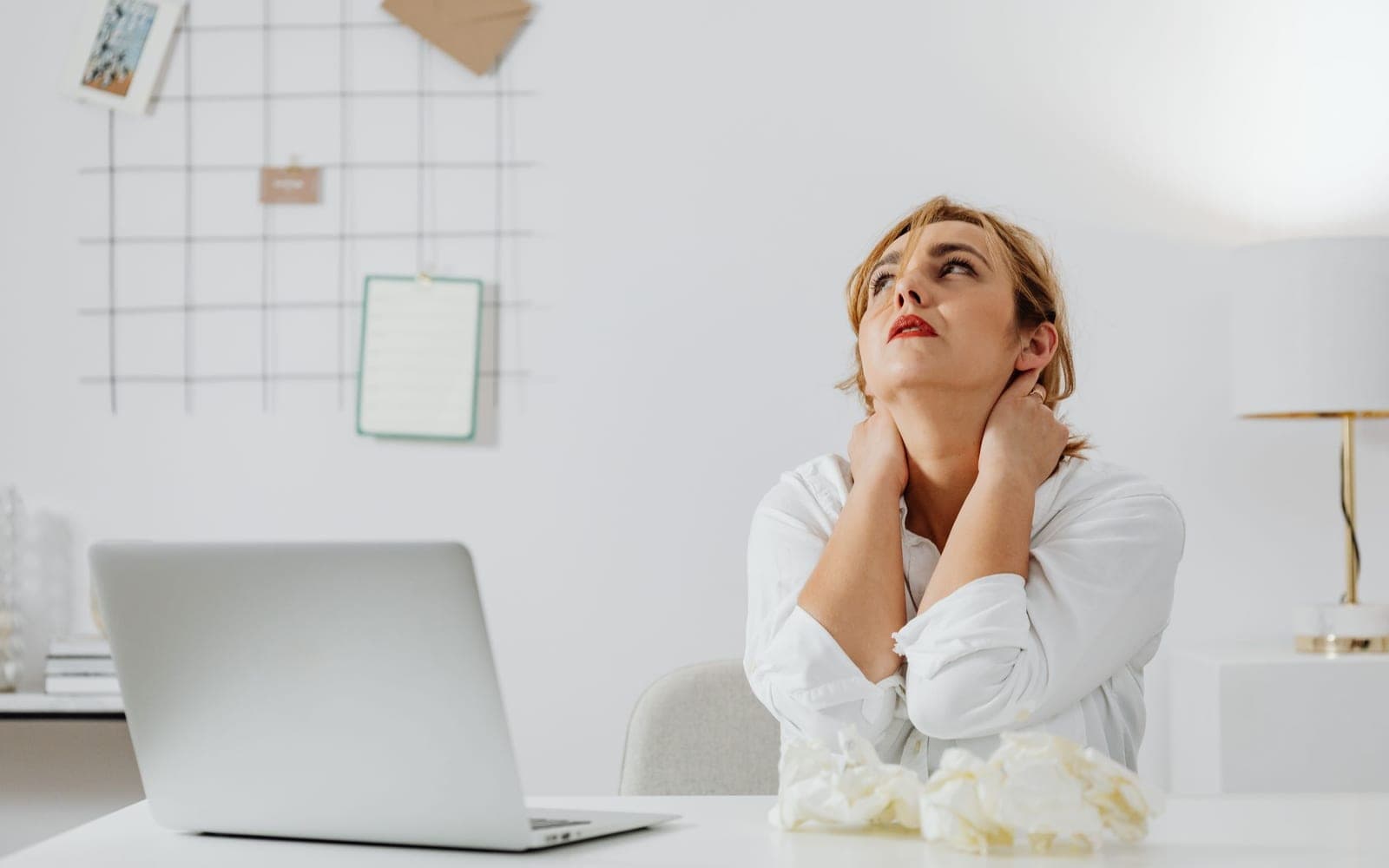
If you have typed "neck pain desk" or "posture neck pain" into a search bar this week, you are in good company. The clocks went back on Sunday 25 October, and in Aberdeen that means the light is gone by half past four, the evening walk becomes an evening on the sofa with a laptop, and the heating goes on in rooms where everyone sits still. The neck is usually the first thing to complain. This guide explains why, sets out what the NHS says to do about an everyday stiff neck, lists the symptoms that need a GP, and describes how osteopathy could help.
Why the neck gets worse once the clocks go back
Nothing about the clock change hurts the neck directly. What changes is how many hours a day the head is held forward and still. The NHS lists bad posture, "for example, when sitting at a desk for a long time", among the most common causes of neck pain, and its prevention advice is as plain: do not keep your neck in the same position for a long time.
The dark months stack the odds. Evenings that used to be spent outside are spent on a laptop, a phone or a tablet, all held lower than a monitor, so the head drops further. Walking falls, and walking is the one time most of us hold the head level and let the shoulders swing. And with the heating on, people tuck up on a sofa with a device on their knees for two or three hours, a position no office chair would allow.
The headache that often goes with it is part of the same picture. The NHS names bad posture and straining the eyes by looking at a screen among the common causes of headaches, and a headache that starts at the base of the skull and spreads forward is one of the two kinds osteopaths commonly help with. Our headaches and migraine page covers that side.
What desk neck pain feels like, and what it is not
The usual pattern is stiffness and an ache across the back of the neck and the top of the shoulders, worse by late afternoon and when you turn to look over your shoulder, better at the weekend or after a walk. Clinicians call it uncomplicated mechanical neck pain: the joints, muscles and ligaments objecting to the load, nothing more serious. The NHS says most neck pain only lasts a few weeks.
Some things do not fit that pattern. Pins and needles, numbness or a cold feeling down the arm point to a nerve rather than a muscle, and the NHS says to see a GP if you have them. Neck pain that follows a fall, a car accident or a blow to the head needs a doctor before any hands-on treatment.
What the NHS says to do about it yourself
The NHS self-care advice for neck pain is short. Take paracetamol or ibuprofen, or use ibuprofen gel on your neck. Use a low, firm pillow. Put heat or cold packs on your neck: a hot water bottle wrapped in a tea towel for 20 minutes, two to three times a day, or frozen peas wrapped in a tea towel for five minutes, three times a day. Try neck flexibility exercises. Do not wear a neck collar, because it is better to keep your neck moving unless a doctor tells you not to, and do not do anything that could be dangerous because you cannot move your neck, such as driving or cycling.
To stop it coming back, the NHS adds: sit upright, roll your shoulders back gently and bring your neck back; when sleeping, make sure your head is the same height as the rest of your body, have a firm mattress, and do not sleep on your front. If a headache comes with the neck pain, the NHS tension headache page suggests the same low, firm pillow and heat or cold packs.
Five changes for the dark months
None of these needs new furniture. First, raise the screen: a laptop on a desk sits far below eye level, so prop it on a stand or a pile of books and plug in a separate keyboard. Second, bring the phone up to your face rather than your face down to the phone; the hour of scrolling on the sofa is often the worst hour of the day for the neck.
Third, break the stillness. The NHS physical activity guidance for adults says to break up long periods of not moving with some activity, so stand, roll the shoulders and turn the head every half hour. Fourth, keep the walk: the light has moved, not disappeared, and a lunchtime walk does the job the evening one used to. Fifth, light the room, because a screen in a dark room pulls the head forward and makes you squint.
When to see a GP
The NHS says to see a GP if neck pain or stiffness does not go away after a few weeks, if painkillers like paracetamol or ibuprofen have not worked, if you are worried about the pain, or if you have other symptoms, like pins and needles or a cold arm, which could be something more serious. A stiff neck that comes with a very high temperature, a rash that does not fade when a glass is rolled over it, or bright lights bothering you is on the NHS list for calling 999 or going to A&E. Those are rare, and not desk problems.
How osteopathy could help, and booking
Osteopathy could help with uncomplicated mechanical neck pain and with headaches arising from the neck; both are on the list of conditions the Advertising Standards Authority accepts osteopathy can help with. At the clinic that starts with a history and an examination of how far the neck moves, which joints and muscles are tender and whether the upper back and shoulders are adding to the load, followed by gentle hands-on treatment and advice on the desk, the pillow and simple exercises. Our earlier post, osteopathy for chronic neck pain, walks through a first appointment, and the neck pain page has the rest.
A first visit, including the consultation, is £80, and continuing treatment is £70. No referral is needed. Book an appointment online or call 01224 707877; the clinic is at 24 Ellon Road, Bridge of Don, with free parking.
Sources
- NHS: neck pain
- NHS: headaches
- NHS: tension headaches
- NHS: physical activity guidelines for adults aged 19 to 64
- Committee of Advertising Practice: health, osteopathy (the accepted conditions list)
This article is general information, not personal medical advice. If you are worried about a symptom, see your GP or call NHS 24 on 111.

More from the blog
Using Your Health Insurance for Osteopathy in Aberdeen: Aviva, WPA and Cigna Explained
How to use Aviva, WPA or Cigna health insurance for osteopathy in Aberdeen: referrals, authorisation, excesses and limits, and what to tell us when you book.
Sciatica or Just Back Pain? How to Tell, and What the NICE Guidance Says Actually Helps
How to tell sciatica from ordinary back pain, the signs that need A&E today, what the NICE guidance recommends and rules out, and how an osteopath can help.
Osteopathy for Babies and Children in Aberdeen: A Parent's Guide
How osteopathy for babies and children works, the gentle techniques used, how it may help, what we will not claim, when to see your GP, and what a visit costs.
Book your appointment
Need an appointment or just have a general enquiry? Complete the form and we'll be in touch within 24 hours. If you require to be seen urgently or need some initial advice, please give us a call.