

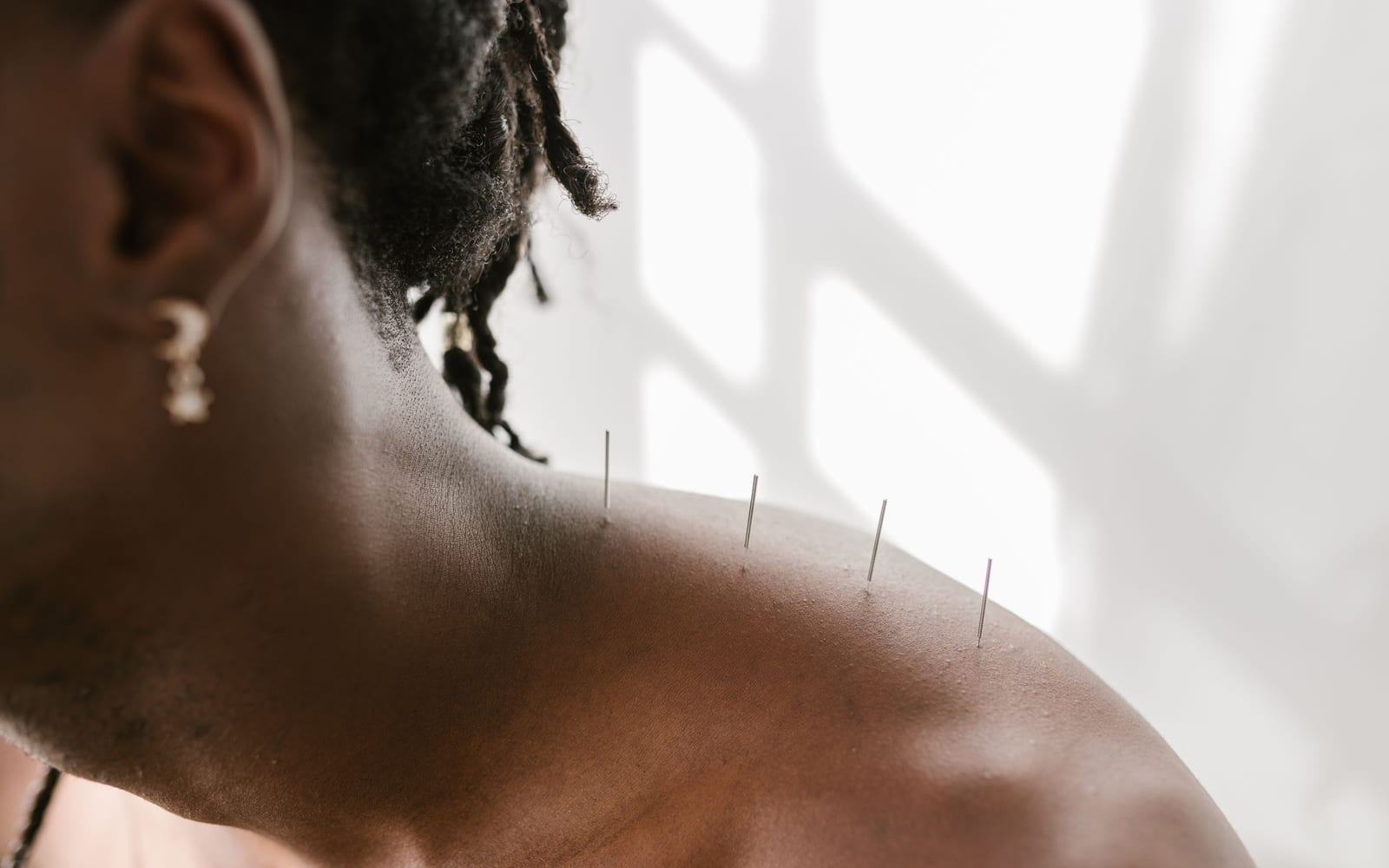
If you have searched for "dry needling Aberdeen" you have probably been told by a friend or a running club that it helped them with a stubborn knot, and you may be wondering whether it is just acupuncture under another name, and whether it hurts. This guide sets out what dry needling is, how it differs from acupuncture, what the needle feels like, who should not have it, and what the evidence does and does not support.
What dry needling is
Dry needling is a treatment technique that uses fine needles inserted into painful knots in muscles. "Dry" means nothing is injected: the needle itself is the treatment. At the clinic in Bridge of Don it is carried out by the osteopath, who is trained in the technique, and it is used for the short-term relief of chronic low back pain, neck pain and tension-type headaches, and to release muscular trigger points, the tight, tender bands most people call knots.
It is not offered as a stand-alone treatment. The clinic's own description is that it works well in conjunction with osteopathic treatment and is often most effective combined with another treatment such as massage: one tool within a plan, after an assessment. The clinic also says plainly that nobody should feel obliged to have it; it is offered as an option, and treatment goes ahead without it if you would rather not.
Dry needling versus acupuncture
The needles are the same: fine, solid, single-use and sterile. What differs is where they go and why. Traditional Chinese acupuncture places needles into meridian points mapped across the body according to its own theory. Dry needling places the needle directly into the local anatomy of the problem being treated, usually the tight band of muscle you can feel under your thumb. Some practitioners call it trigger point acupuncture, and in the acupuncture world it is one needling technique among several.
The NHS describes acupuncture simply as needles put in parts of the body to relieve pain, and may offer it for long-term pain or migraine-type headaches. That is a statement about acupuncture, not an endorsement of dry needling.
What it feels like
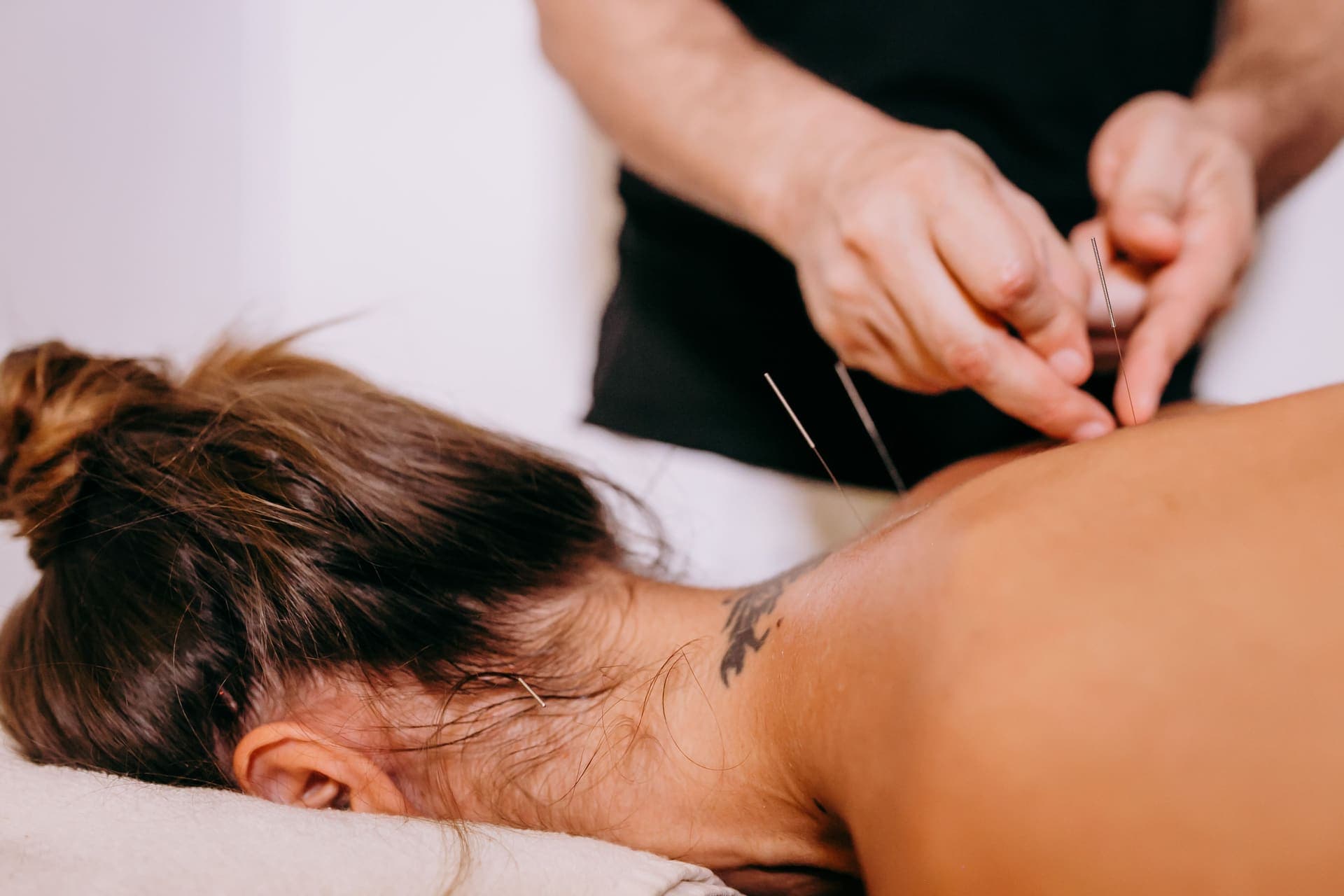
Most people feel very little when the needle goes in. What some notice is a brief twitch or ache in the muscle, or a feeling of warmth, when the needle reaches a trigger point, and that usually lasts a few moments. As the muscle releases around the needle the osteopath may push it slightly further to re-stimulate the area, which can bring the same brief discomfort back.
Afterwards you may feel a little sore, which is temporary, and some people feel tired and sleep more than usual that night. Some report immediate relief; others respond more slowly and need more than one session. Nobody can promise in advance that it will work for you.
What the evidence supports, and what it does not
Dry needling is sometimes sold with more confidence than the research allows, so it pays to be precise.
Start with NICE. Its guideline on low back pain and sciatica, NG59, says: do not offer acupuncture for managing low back pain with or without sciatica. The same guideline says manual therapy should be considered only as part of a treatment package that includes exercise. NICE has not assessed dry needling separately, and it is a different technique from the acupuncture NICE ruled out, but the two are not unrelated. If you have back pain, the foundation of your care is still staying active and exercise, as our sciatica or back pain post explains.
Dry needling has its own evidence base, and it is limited. A 2023 systematic review of trials in people with low back pain and trigger points found that dry needling reduced pain and disability straight after treatment compared with the treatments it was tested against, but results varied at follow-up and the authors called for better long-term studies. A meta-analysis in neck pain with trigger points found low-to-moderate quality evidence that adding dry needling to other treatment improved pain and movement in the short term, with no clear effect in the medium or long term. For tension-type headaches the evidence is thinner still, mostly small trials.
The fair summary: some evidence that dry needling can ease trigger point pain for a short period, especially combined with other treatment, and no good evidence that it changes the long-term course of back pain, neck pain or headaches. That matches how the clinic uses it: for short-term relief, alongside hands-on treatment and exercise, never instead of them.
Who should not have dry needling
Before any treatment the osteopath takes a full case history, in which all conditions and medications are disclosed, and that is where the decision is made. The clinic names blood clotting conditions and blood thinning medication as examples of where dry needling is not suitable. The NHS says acupuncture may not be safe if you are taking blood thinning medicine or are at increased risk of bleeding, or if you have a skin condition or skin infection, and the same caution applies to dry needling because the needle is the same. If any of those apply to you, say so at the start.
When to see a GP first, and how to book
The NHS says to see a GP for back pain that does not improve after treating it at home for a few weeks, stops you doing your day-to-day activities, or is worse at night; for neck pain or stiffness that does not go away after a few weeks or comes with pins and needles or a cold arm; and for headaches several times a week or severe ones. For back pain with numbness or weakness in both legs, loss of feeling around your genitals or anus, or changes in your bladder or bowels, call 999 or go to A&E. None of those is a reason to book needling.
If your problem is a stiff, aching back or neck with knots you can feel, start with an osteopathy assessment and ask about dry needling as part of it. There is no separate price for it: osteopathy is £80 for a first visit including consultation and £70 for continuing treatment. No GP referral is needed. Read more on the dry needling, back pain and neck pain pages, then book online or call 01224 707877.
Sources
- NICE guideline NG59: low back pain and sciatica in over 16s, recommendations
- NHS: herbal medicines and complementary therapies, including acupuncture
- Systematic review: dry needling for myofascial pain in low back pain (2023)
- Meta-analysis: dry needling combined with other therapies for trigger points in neck pain (2021)
- NHS: back pain
- NHS: neck pain
- NHS: tension headaches
This article is general information, not personal medical advice. If you are worried about a symptom, see your GP or call NHS 24 on 111.

Related treatments
More from the blog

Shoulder Pain That Will Not Shift: Frozen Shoulder, Tendons and the Winter Coat Test
Frozen shoulder, a rotator cuff tendon or the neck: how to tell which is behind a shoulder that will not shift, what the NHS advises and when to see a GP.

Back Pain Offshore: Long Sits, 12-Hour Shifts and the Helicopter, and What to Do Between Trips
Why back pain follows the offshore rotation, what the NHS and NICE say helps, when to see a GP, and how to use your time ashore in Aberdeen to sort it out.

Clocks Back, Neck Forward: Desk Posture and the Dark-Evening Neck Pain
Why neck pain at the desk gets worse once the clocks go back, what the NHS says to do about it, when to see a GP, and how an osteopath in Aberdeen could help.
Book your appointment
Need an appointment or just have a general enquiry? Complete the form and we'll be in touch within 24 hours. If you require to be seen urgently or need some initial advice, please give us a call.